
How to choose the right watercolor travel journal?
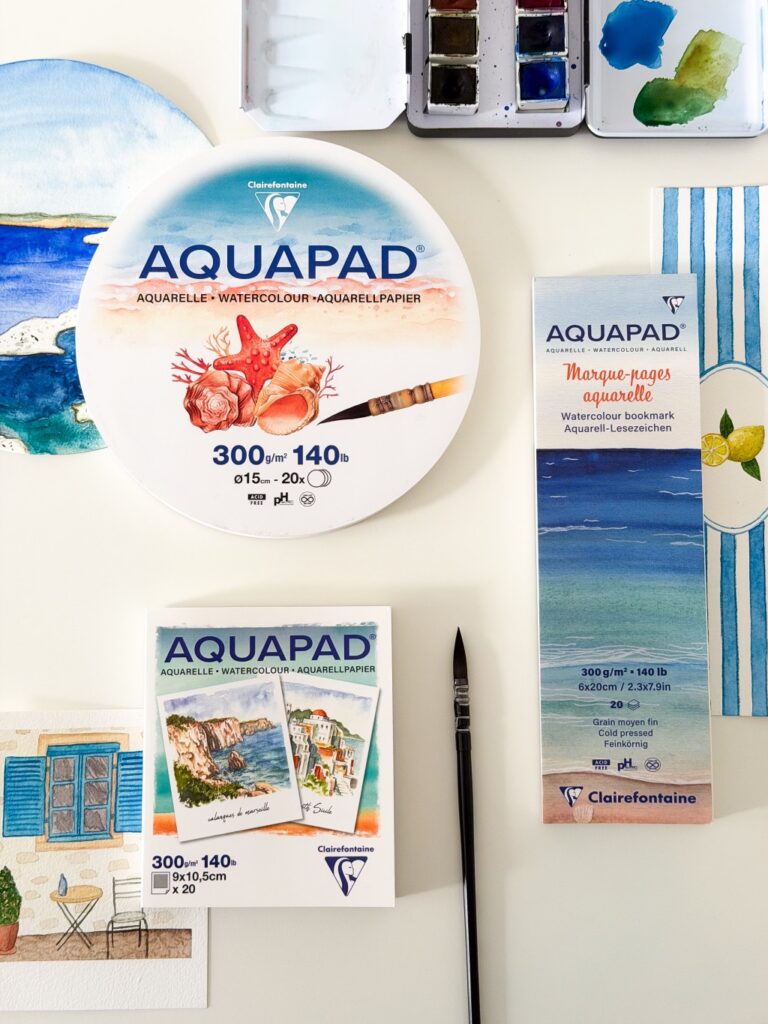
Why the choice of notebook is essential for watercolor painting while traveling
The travel diary accompanies the artist everywhere. It must be practical, durable and pleasant to use. A poorly suited notebook can quickly hamper creativity, with curling paper, dull colors or an uncomfortable grip. Conversely, a well-chosen notebook becomes a true traveling companion, which makes you want to paint as soon as the moment presents itself.
Paper, number one criterion for a watercolor notebook
Paper is the central element of any watercolor notebook. It is he who will absorb the water, reveal the pigments and support the different techniques.
The ideal weight for watercolor in notebook
For a watercolor travel notebook, paper of at least 200 g/m² is recommended. This weight allows you to work with light washes without too much deformation. For more humid practice or color overlays, a paper around 300 g/m² provides better comfort and better hold.
The choice of grain according to your style
The grain of the paper directly influences the rendering. A fine grain is versatile and is ideal for a travel notebook, as it allows both drawing and watercoloring. The rag grain offers more texture and highlights water effects, while the smoother satin paper is appreciated for details and precise lines.

Cellulose or cotton paper, which to choose
The majority of travel journals use high quality cellulose paper. This type of paper offers an excellent compromise between performance, resistance and accessibility. Cotton paper, more high-end, is ideal for very watercolor practice, but it is often reserved for more specific uses.
The notebook format, between mobility and comfort
The format of the notebook directly influences the way you paint and travel with it.
Small or large format, a question of habit
A small format is perfect for painting from life, on the go or during short breaks. It fits easily into a bag and encourages you to draw more often. A larger format provides more space for landscapes and detailed compositions, but requires a little more organization when traveling.
Portrait or landscape, a personal approach
The portrait format is often chosen to tell a story, alternate texts and drawings, and structure a souvenir notebook. The landscape format is very suitable for panoramas, urban scenes and r sketches.quickly taken on the spot.
Binding and solidity, criteria not to be neglected
A travel notebook is handled frequently. Its binding must allow comfortable opening and resist time.
A quality sewn or glued binding ensures good hold of the pages and an appreciable flat opening for painting. Spirals make it easier to open completely, but provide less protection to the pages during transport. The cover, whether hard or soft, also plays an important role in protecting the notebook, especially when traveling.
Adapt your notebook to your way of painting and traveling
Each artist has their own approach. Some prefer a light and spontaneous watercolor, others like to work in layers with a lot of water. It is therefore essential to choose a notebook in accordance with your technique, but also with your pace of travel. A robust and reliable notebook allows you to concentrate on the essentials, without worrying about the support.
Why choose a quality watercolor book
A quality watercolor book offers paper consistency, better color reproduction and a smoother painting experience. Papermaking know-how guarantees a stable, pleasant and durable support, capable of enhancing each sketch and each travel souvenir.
Choose the right watercolor travel journal
Choosing the right watercolor travel notebook means finding the balance between paper, format, binding and use. A suitable notebook becomes a space of freedom, where each page tells a story and each color evokes a moment lived. By taking the time to select a quality notebook, you can enjoy the pleasure of painting anywhere, simply and with confidence.